Stops migration and protects unaffected areas
Containment, floor protection, and controlled airflow help keep water and humidity from spreading into closets, adjacent rooms, and cabinetry.
Serving Orlando, Florida & surrounding areas
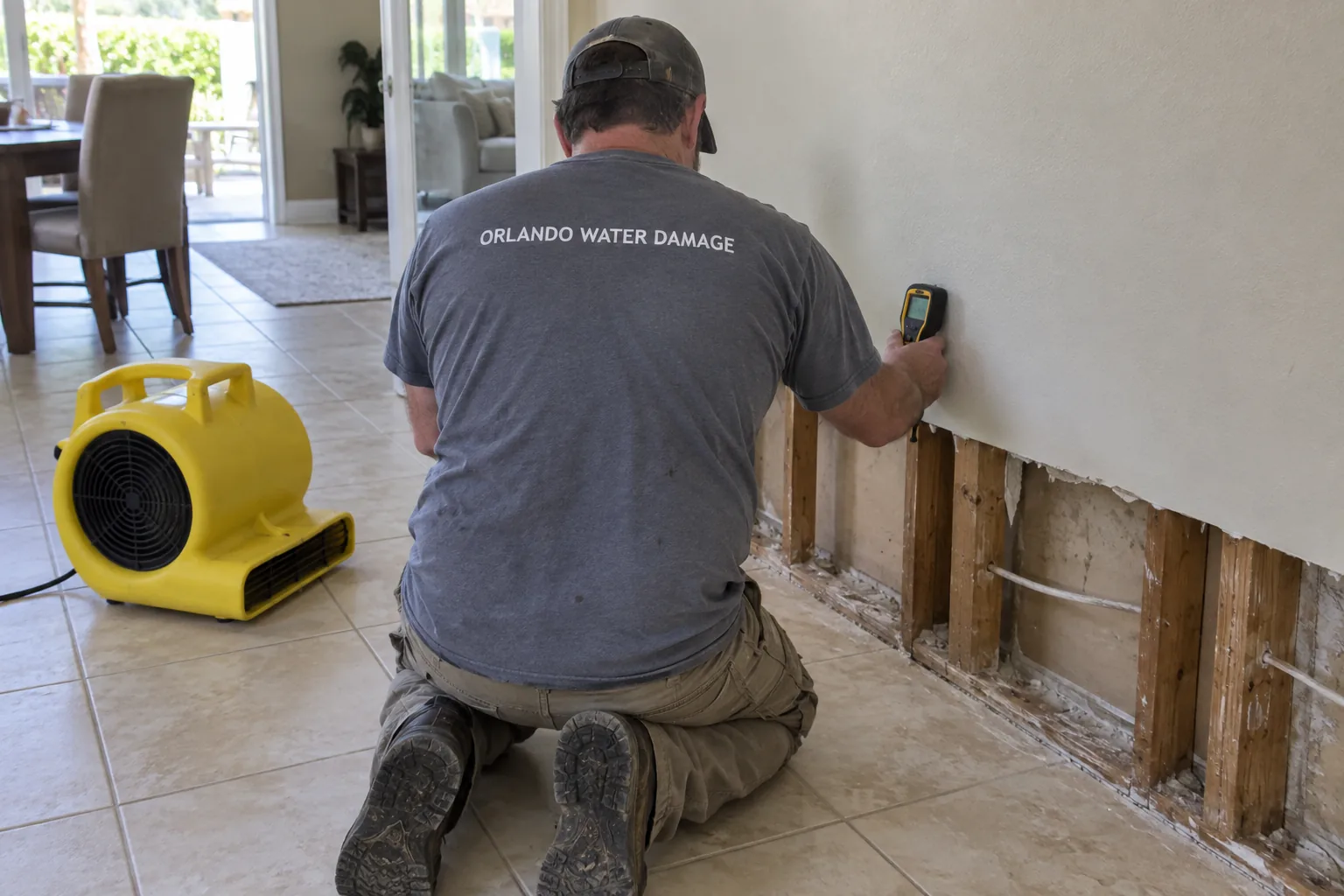
Water Mitigation Service in Orlando
When water gets in, time matters. Get rapid water extraction, professional drying, and clear documentation to protect your property and limit secondary damage.
Extraction, drying, and documentation
If you are searching for water mitigation Orlando, you are probably dealing with water where it should not be: a supply line leak, an overflowing tub, a roof or window intrusion after a storm, or a clogged drain that backed up. The goal of mitigation is simple: remove the water, dry the structure, and control humidity fast enough to prevent further damage.
Orlando's humidity makes wet building materials risky even when the visible water looks minor. Drywall wicks, baseboards trap moisture, and insulation can hold water where you cannot see it. A proper mitigation job is not just running fans. It is targeted extraction, measured drying, and a plan that matches the materials in your home or business.
Orlando Water Damage handles water mitigation across Orlando, FL (32812) with a field-first approach: assess, contain, dry, and document. You will know what was affected, what equipment is placed, what the daily moisture readings show, and what comes next.
Some situations also require full repairs after the structure is dry. If you need broader help beyond mitigation, water damage restoration covers the overall process from emergency response through rebuild planning.
Measured mitigation work
Containment, floor protection, and controlled airflow help keep water and humidity from spreading into closets, adjacent rooms, and cabinetry.
Extraction methods change by surface: carpet, pad, tile grout lines, and slab edges all behave differently. The right approach shortens drying time.
Air movers, dehumidifiers, and targeted cavity drying are selected based on what is wet: drywall, framing, subfloor, insulation, or concrete moisture at edges.
Moisture meters, thermal imaging for guidance, and daily logs confirm progress. Drying decisions should be based on readings, not guesswork.
Fast drying plus appropriate cleaning and, when needed, antimicrobial application helps control conditions that allow odors and growth to develop.
A written scope, photos, equipment logs, and moisture readings help align expectations with property managers and insurance adjusters.
Humidity changes the drying plan
Water behaves differently in Central Florida than it does in a drier climate. High ambient humidity means the air can stay moisture-loaded, which slows evaporation if dehumidification is not sized correctly. That matters for slab-on-grade homes, where moisture can linger at wall bottoms and along flooring transitions.
We also see seasonal storm impacts: wind-driven rain can enter around windows, sliding doors, and roof penetrations even when there is no obvious standing water. In neighborhoods with older housing stock, small supply line leaks or aging water heater connections can run long enough to wet cabinets and drywall before anyone notices.
Our mitigation plans focus on the building assembly in front of us. For example, we may use low-grain refrigerant dehumidifiers when conditions call for them, add injection drying for wall cavities, or set up containment when a wet area opens into the rest of the home.
In Orlando, we commonly work in areas like Conway (lots of mid-century homes with renovations that hide plumbing changes), Lake Nona (newer builds where leaks can travel through multi-story framing and into ceilings), and Downtown/Colonialtown corridors (mixed-use properties where quick containment helps keep operations running).
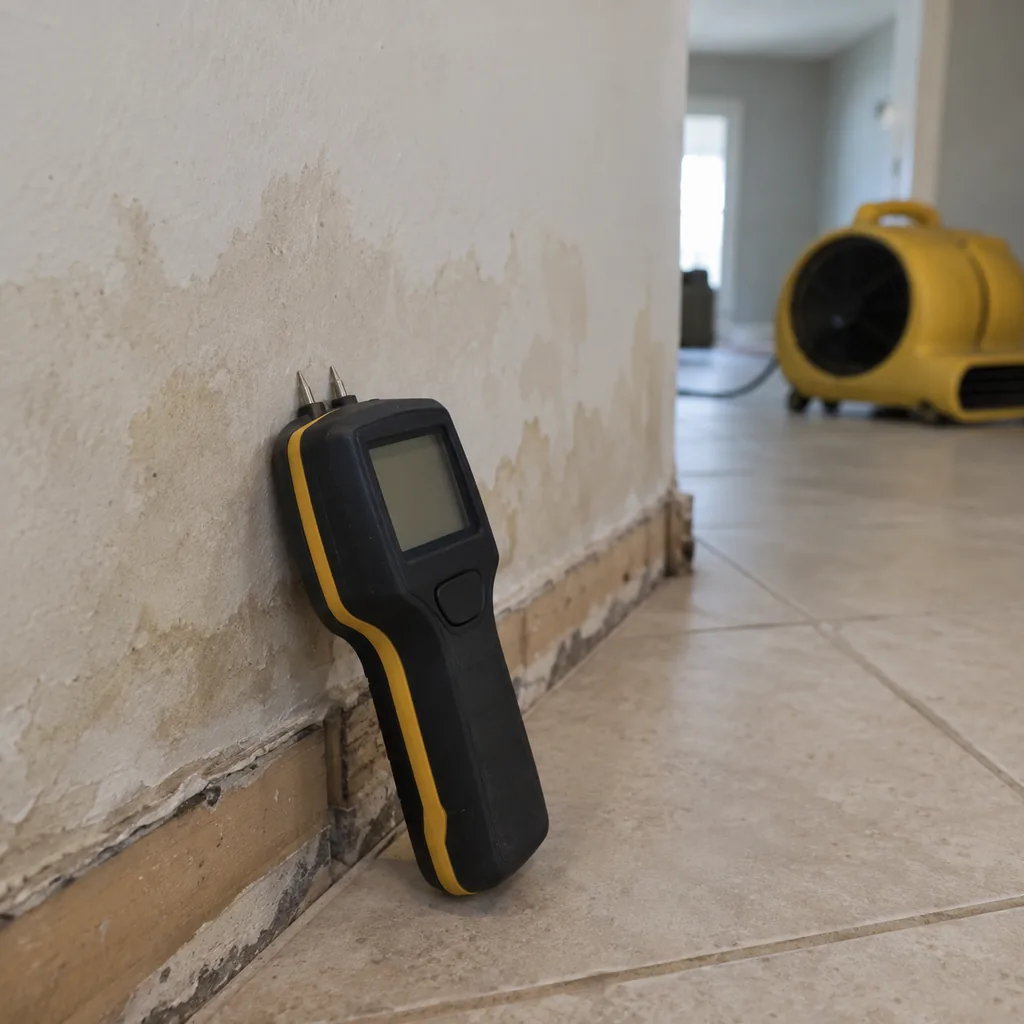
We identify the source (when accessible), look for electrical risks, and map affected materials. If water is still active, stopping the source is the first priority.
We extract standing water and remove materials that cannot dry in place, such as saturated pad or swollen baseboards, when removal helps the structure dry correctly.
Air movers and dehumidifiers are placed to move air across wet surfaces and pull moisture out of the space. Containment may be used to manage airflow and humidity.
We track moisture content and relative humidity, adjust equipment placement, and confirm drying progress. The goal is stable, verifiable dry standards for the affected materials.
Once readings indicate the structure is dry, we document the outcome and outline the next steps, whether that is minor repairs, flooring replacement, or coordinating with your restoration plan.
Planning the mitigation scope
Water mitigation in Orlando typically ranges from about $900 to $4,500 for many residential losses, depending on how far the water traveled and how much drying equipment is required. A small, contained leak with limited drying can be near the low end, while multi-room or multi-day drying with material removal can push higher.
Final price depends on affected square footage, water category, required containment, how much demo is needed, access (upper floors and tight cabinets take longer), and how long equipment must run. The exact cost is confirmed after an on-site inspection and moisture mapping.
Straight answers before drying begins
Water mitigation should start as soon as it is safe to do so, ideally the same day, because wet materials begin wicking and humidity rises quickly in Orlando. Early extraction and dehumidification can reduce how much drywall, trim, and flooring ends up needing removal.
Most drying jobs take about 3 to 5 days, but it depends on what is wet (drywall, framing, subfloor), how much water was absorbed, and indoor humidity conditions. Daily moisture readings determine when materials are actually dry enough to move to repairs.
Not always, but removal is common when water has wicked into wall bottoms, insulation is wet, or a cavity needs airflow to dry. The decision is based on moisture mapping and whether materials can realistically dry in place without trapping moisture.
Water mitigation is the emergency phase that focuses on stopping spread, extracting water, and drying the structure; restoration is the repair phase that puts the building back together after it is dry. Many projects need both, but mitigation is the time-sensitive first step.
Yes, we can provide the documentation that insurance commonly requests, such as photos, moisture readings, equipment logs, and a written scope. Coverage and deductibles depend on your policy and the cause of loss, so we focus on clear, job-specific records.
Usually you can stay, but you should expect noise, warmer airflow, and equipment placed to keep air moving. For some commercial spaces or sensitive environments, we can discuss containment and placement options to minimize disruption.
Rapid help for active water damage
Tell us what happened and what areas are affected. We will respond with a clear plan for extraction, drying, and documentation so you can make decisions quickly.