Water extraction and pump-out
Removal of standing water from tile, LVP, carpet, and concrete, followed by targeted extraction at baseboards and transitions where water hides.
Serving Orlando, Florida & surrounding areas
Water Damage Repair Service in Orlando
When water gets into drywall, flooring, or cabinets, time matters. Our Orlando crew handles water removal, drying, and repair with a clear scope so you know what is happening in your home and why.
Stop the spread and dry the structure
If you are searching for water damage repair Orlando FL, you are usually dealing with a leak that will not wait: a supply line under a sink, an overflowing tub, a failed water heater, storm water getting in, or a burst pipe that soaked multiple rooms.
Orlando Water Damage approaches every job the same way: remove the water you can see, find the moisture you cannot, dry the structure correctly, and then repair what was affected. Skipping steps is how you end up with warped floors, crumbling drywall, peeling paint, and odor that comes back weeks later.
Central Florida's humidity also makes drying more demanding than it looks. Proper equipment placement, controlled airflow, and consistent monitoring are what get materials back to a stable moisture level instead of just drying the surface.
If you also need a broader recovery plan after a major loss, our water damage restoration service covers the full start-to-finish approach and coordination that larger projects often require.
Measured drying and practical repairs
Removal of standing water from tile, LVP, carpet, and concrete, followed by targeted extraction at baseboards and transitions where water hides.
Air movers and dehumidifiers set for the room layout and materials, with moisture checks on framing, drywall, subfloors, and sheathing as needed.
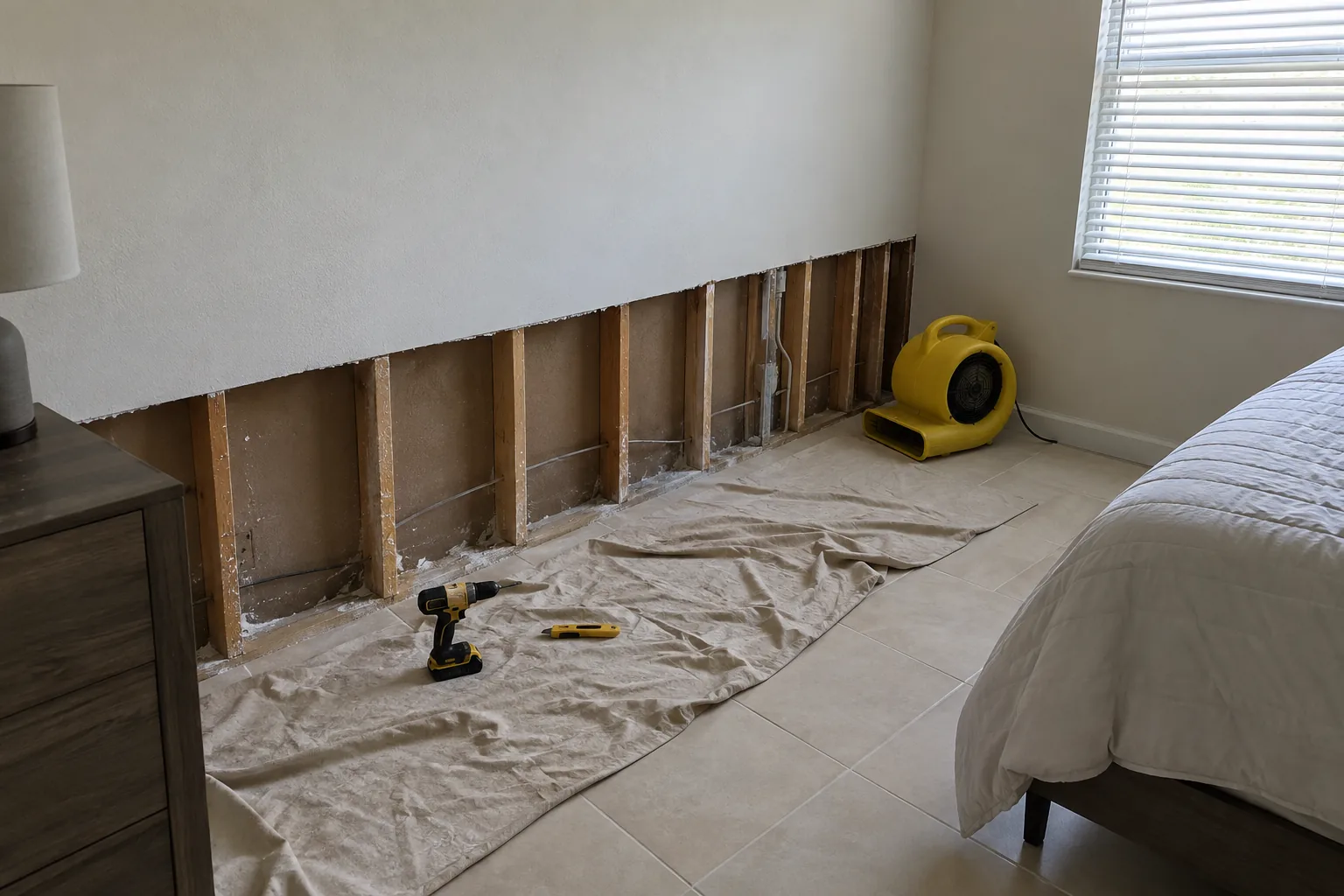
Controlled removal of damaged sections, drying of wall cavities when appropriate, and rebuild so the wall finishes return to a clean, uniform look.
Assessment of swelling, delamination, and cupping, then repair or replacement based on what can be dried back versus what has permanently distorted.
Drying strategies for toe-kicks, vanity sides, and baseboards when the material condition allows, with replacement when swelling or separation is permanent.
Clear notes and photos of affected areas and readings so decisions are based on measured conditions, not guesswork.
Dry first, rebuild second
Good-looking repairs are not enough if the structure is still wet. Our process focuses on drying standards first, then rebuilding.
We start by isolating the source and checking where water traveled. Moisture often wicks up drywall behind baseboards, moves under floating floors, and settles in low spots. We map wet areas and set equipment to move air across wet surfaces while pulling humidity out of the air.
As drying progresses, we monitor moisture content and adjust equipment placement. Once materials reach a stable, acceptable level, we repair the affected building materials: drywall, texture, paint, trim, and flooring as needed.
This method matters in Orlando homes with slab-on-grade foundations and lots of tile and LVP, where water can migrate to adjacent rooms before it is obvious at the surface.
If you are dealing with an urgent leak, getting a professional on site quickly reduces how much has to be removed and rebuilt later.
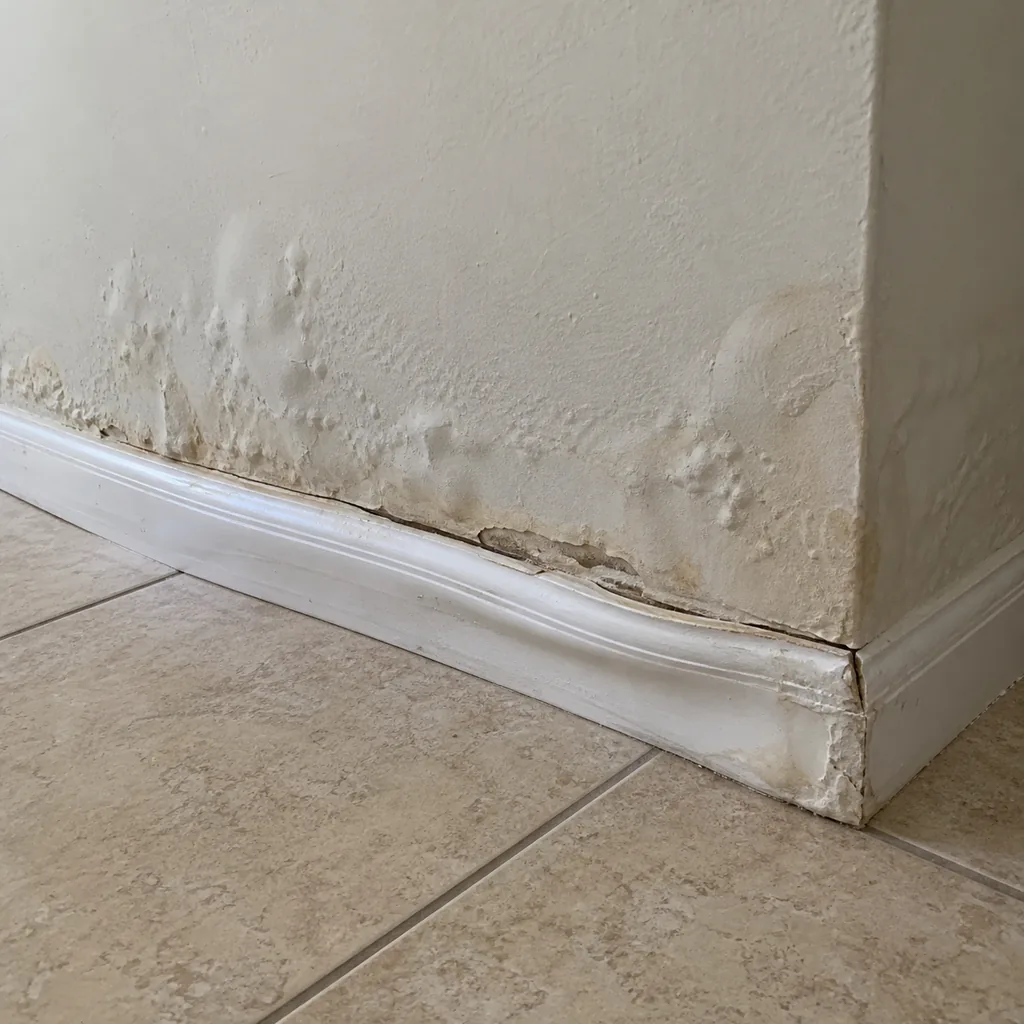
We identify the water source (when accessible), check rooms beyond the obvious wet spot, and document affected materials so the scope is clear.
Standing water is extracted first, then we address saturated carpeting, padding, or porous materials that cannot be dried in place.
We set air movers and dehumidifiers for the structure and material type, then monitor readings until conditions stabilize.
If drywall, insulation, or cabinetry has absorbed water past a salvage point, we remove only what is necessary to dry the structure properly.
We put the space back together: drywall, texture, paint, baseboards, and flooring repairs based on the final confirmed moisture conditions.
Understanding the repair scope
Water damage repair in Orlando typically ranges from about $650 to $3,500 for a small, contained leak with drying and minor drywall/trim repair, while larger multi-room losses with flooring removal and rebuild often run $5,000 to $15,000+ depending on materials and how far water traveled.
Your price depends on the category of water involved, the square footage affected, how long materials stayed wet, what must be removed to access wet cavities, and whether flooring, cabinets, or insulation need replacement. The exact cost is confirmed after an on-site inspection and moisture readings.
Straight answers before repairs
Start as soon as the water source is stopped because wet drywall, trim, and flooring can wick and swell quickly in Florida humidity. Early extraction and drying often reduces how much material needs to be removed, which can shorten the repair timeline and lower the overall scope.
Sometimes, yes, if moisture readings show the drywall and the wall cavity can be dried back to an acceptable level. If drywall is soft, crumbling, heavily swollen, or the cavity stays wet, selective removal is usually the correct way to dry the structure and prevent lingering odor and staining.
For meaningful drying, professional dehumidification is usually needed because fans alone mainly move humid air around the room. A dehumidifier actually removes water vapor from the air, which lets wet materials release moisture instead of staying damp.
Many contained losses take 3 to 5 days for drying, then repairs can begin once materials are stable. Larger losses or jobs that require flooring or cabinet replacement can take longer because demolition, ordering materials, and finish work add time after the drying phase.
Stop the water if you can do it safely, shut off power to affected areas if water is near outlets, and move small items off the floor. Avoid running your HVAC hard if it is pulling humid air into wet rooms, and do not pull up flooring or cut drywall unless you are sure it is safe and you will not spread contamination.
Higher quotes often reflect more thorough drying and repair scope: moisture mapping beyond the obvious wet spot, sufficient equipment for the layout, monitoring visits, and rebuild work that restores finishes correctly. Lower quotes sometimes skip monitoring or assume materials are dry because they look dry, which can lead to repeat repairs later.
Measured conditions and a written scope
Tell us what happened and what areas are wet. We will inspect, take moisture readings, and give you a written scope for water removal, drying, and the repairs needed to put the space back together.